
JuristIS
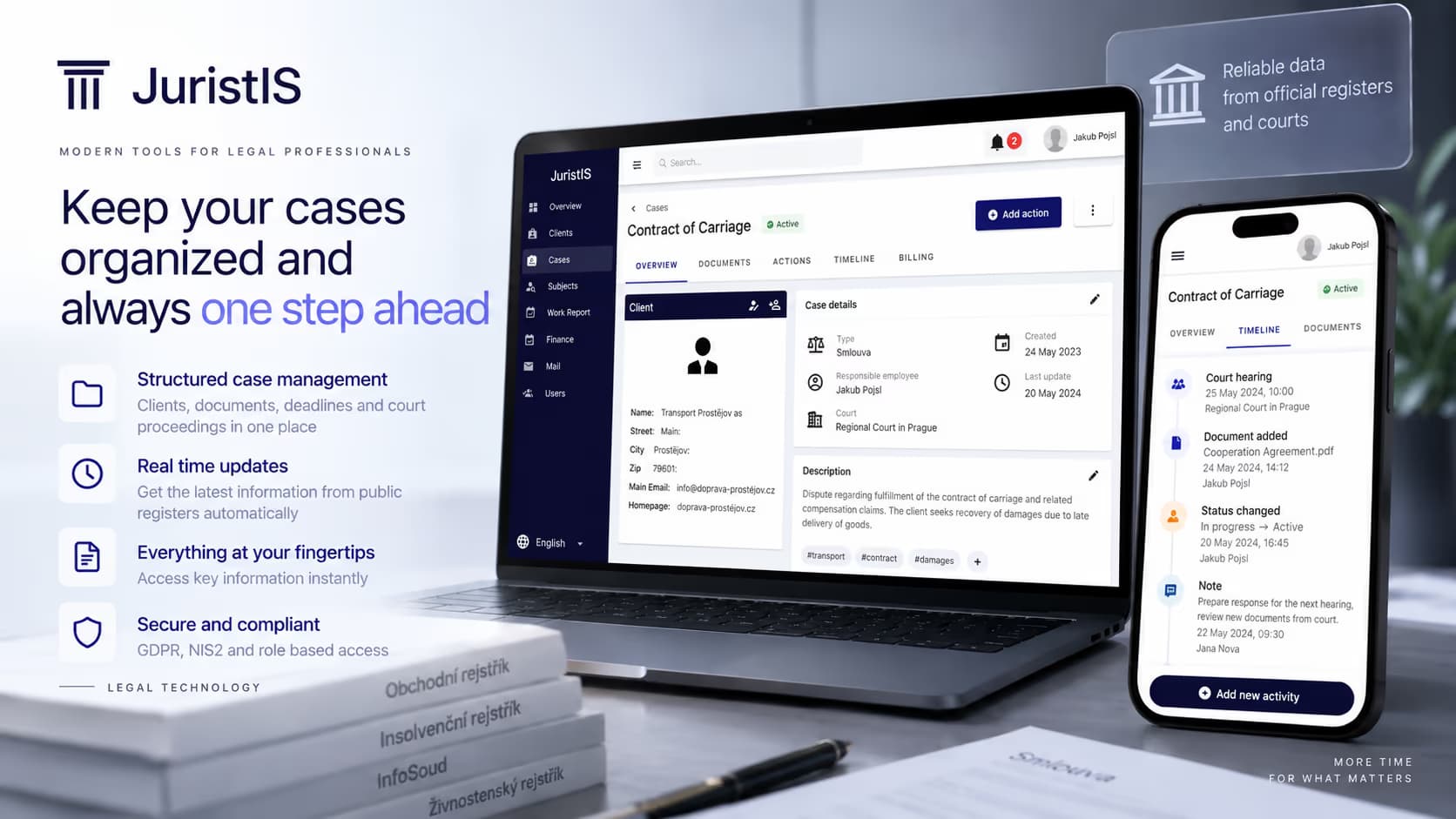
We built JuristIS for small and medium-sized law firms. It brings clients, cases, documents, time records and billing into one system, with connections to Czech public registers and data boxes.
Technology
Designedaroundtheworkofalawfirm
We began by examining how law firms manage clients, cases, documents and billable work. These workflows shaped the first version of the system.
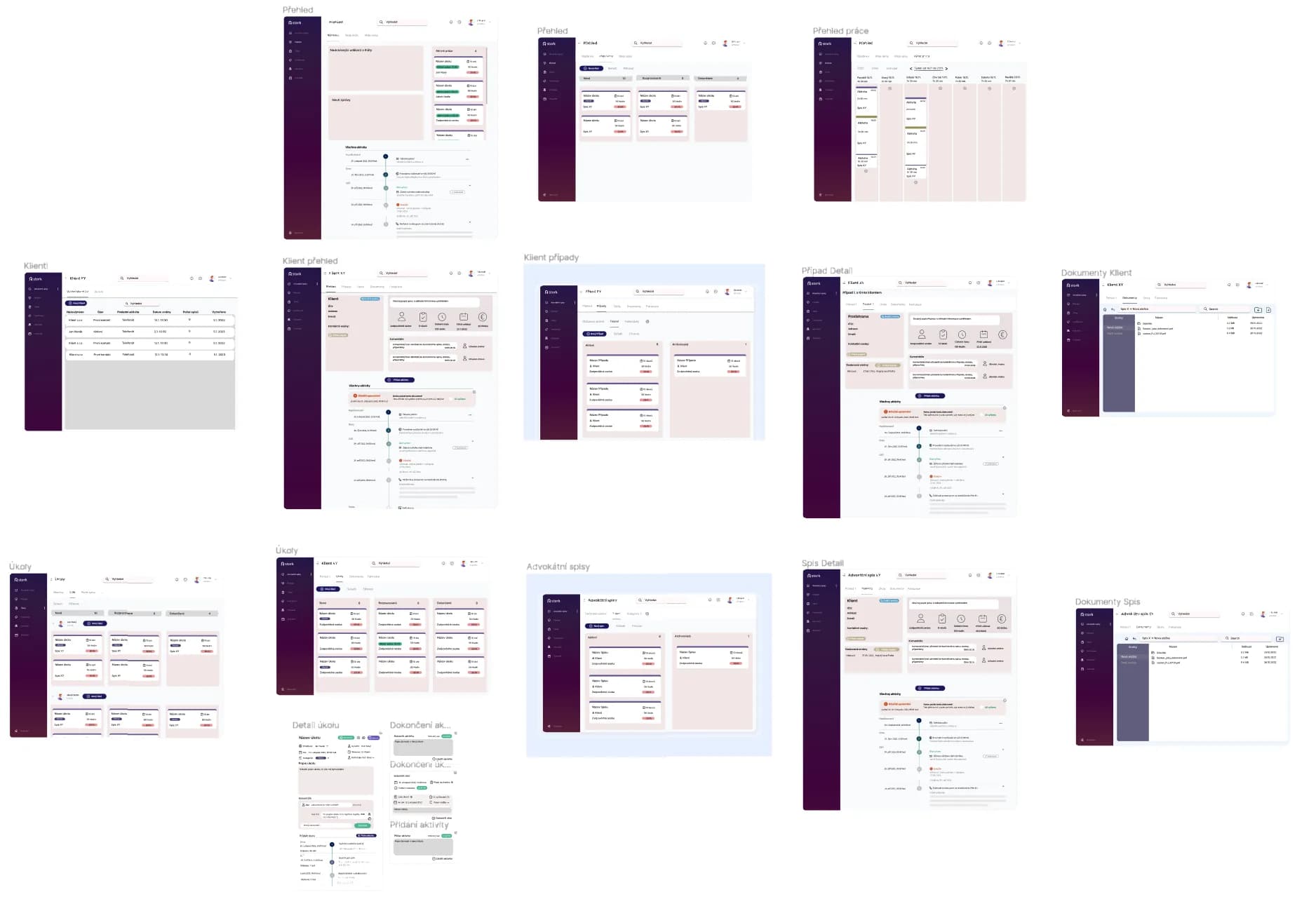
We used UML diagrams to define the main workflows and relationships, then refined the design with feedback from legal professionals.
Lawyers tested interface prototypes as the design developed. Their feedback guided changes to navigation and everyday tasks.
Separatingtheinterface,applicationrulesanddata
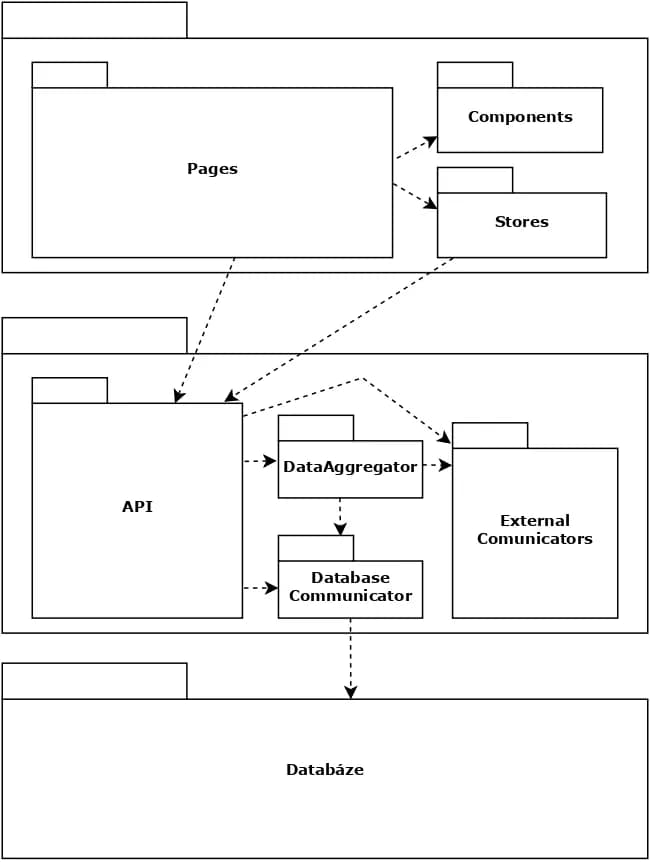
The application separates the user interface, business logic and data storage so each part can be maintained independently.
The Model-View-Presenter pattern separates what users see from the application’s data and rules. This allows interface components and business logic to be developed and tested separately.
The database links clients, cases, documents and activity records. We mapped these relationships before implementation.
Public-registerinformationwithineachcase
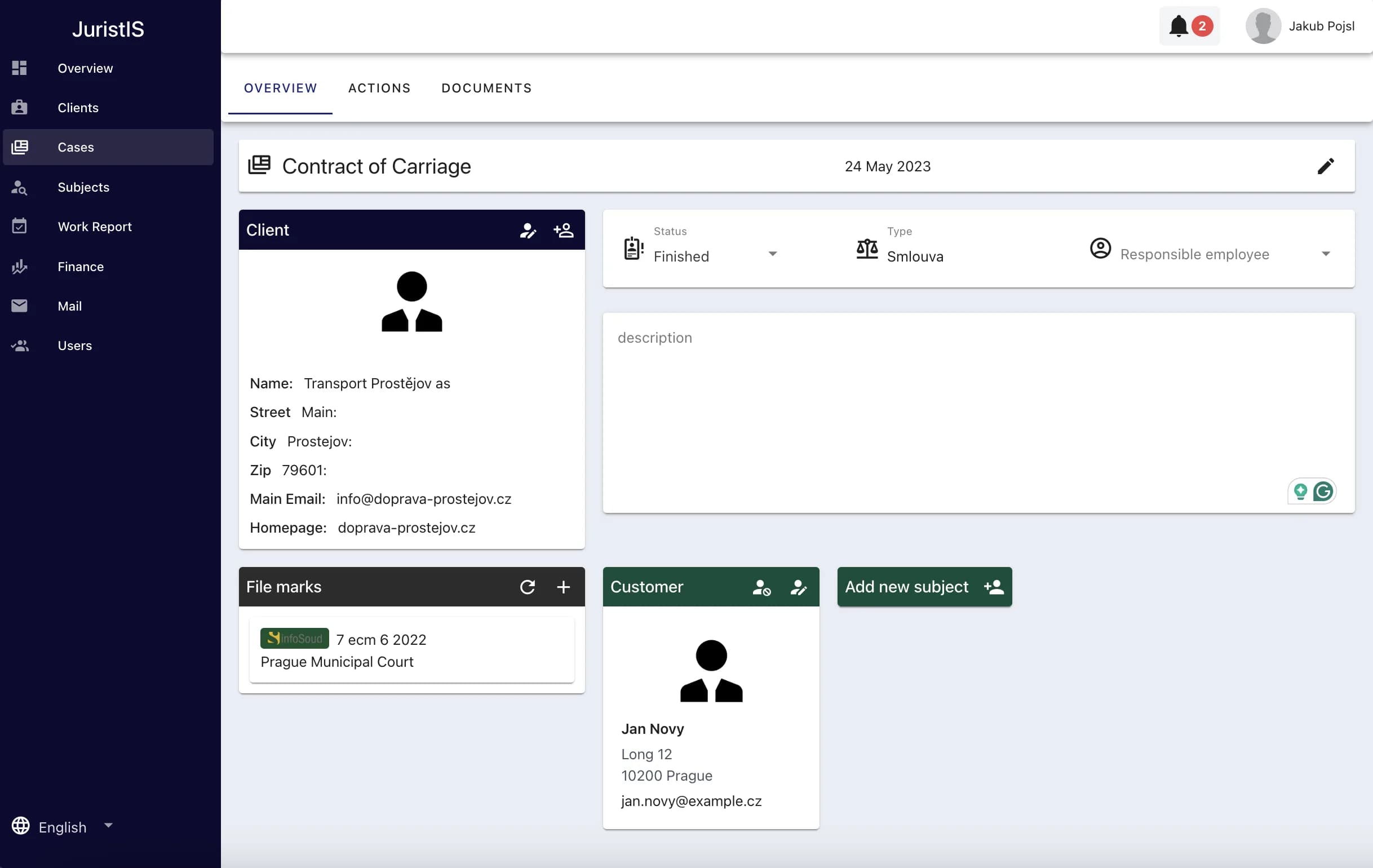
Connections to public databases, including the Commercial Register and Insolvency Register, bring client information directly into JuristIS.
The registers return data in different formats. A collection module converts the records into a common format used by the application.
Lawyers can follow case progress, deadlines, hearings and associated documents. Connections to public registers retrieve and update available client and court information.
Timerecordsandbilling
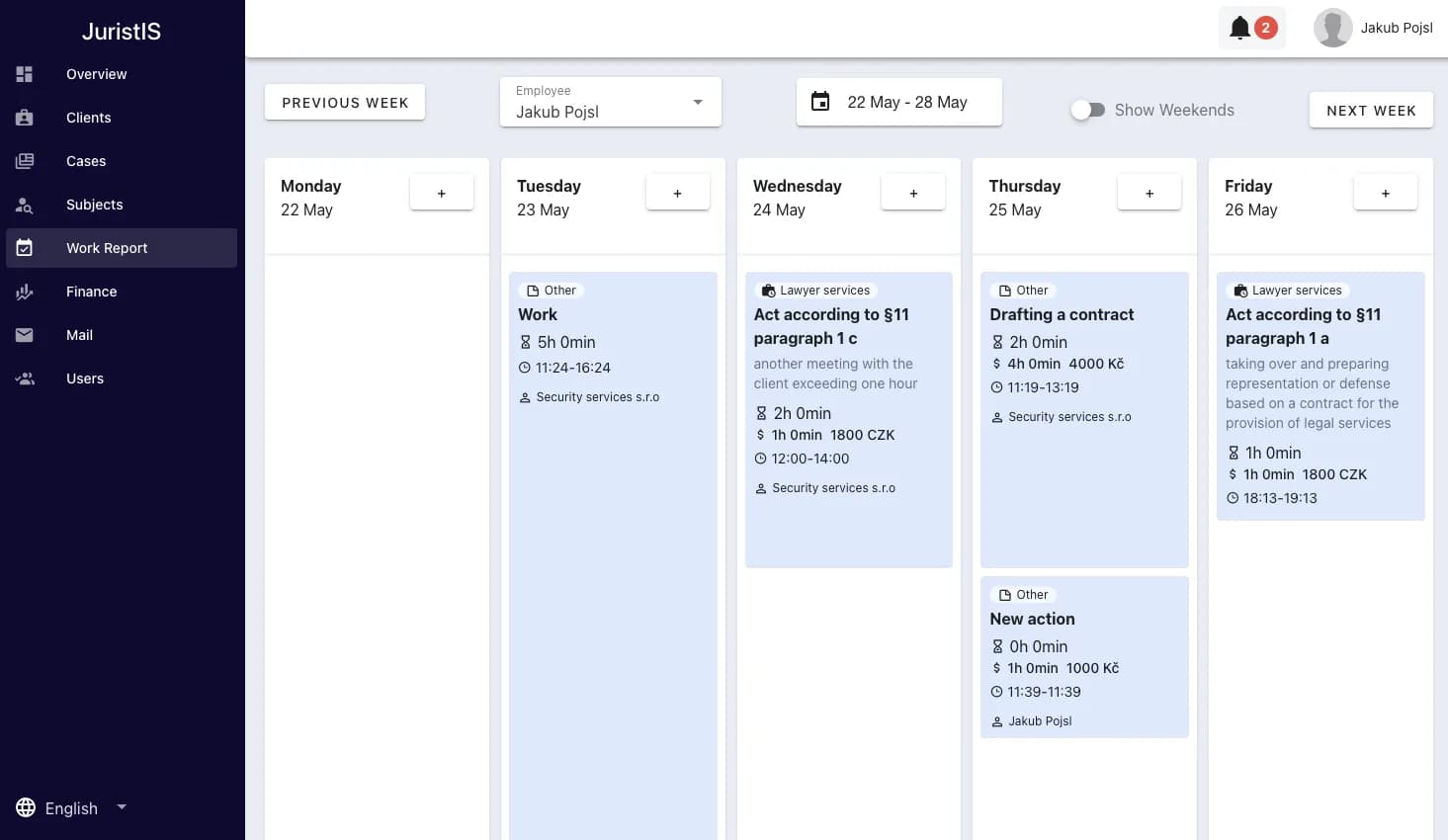
Staff record their work and billable time against cases. These records support invoices calculated from agreed rates or the applicable legal tariff.
The connection to Czech data boxes (ISDS) lets staff manage official correspondence within JuristIS.
Documentmanagementandaccesspermissions
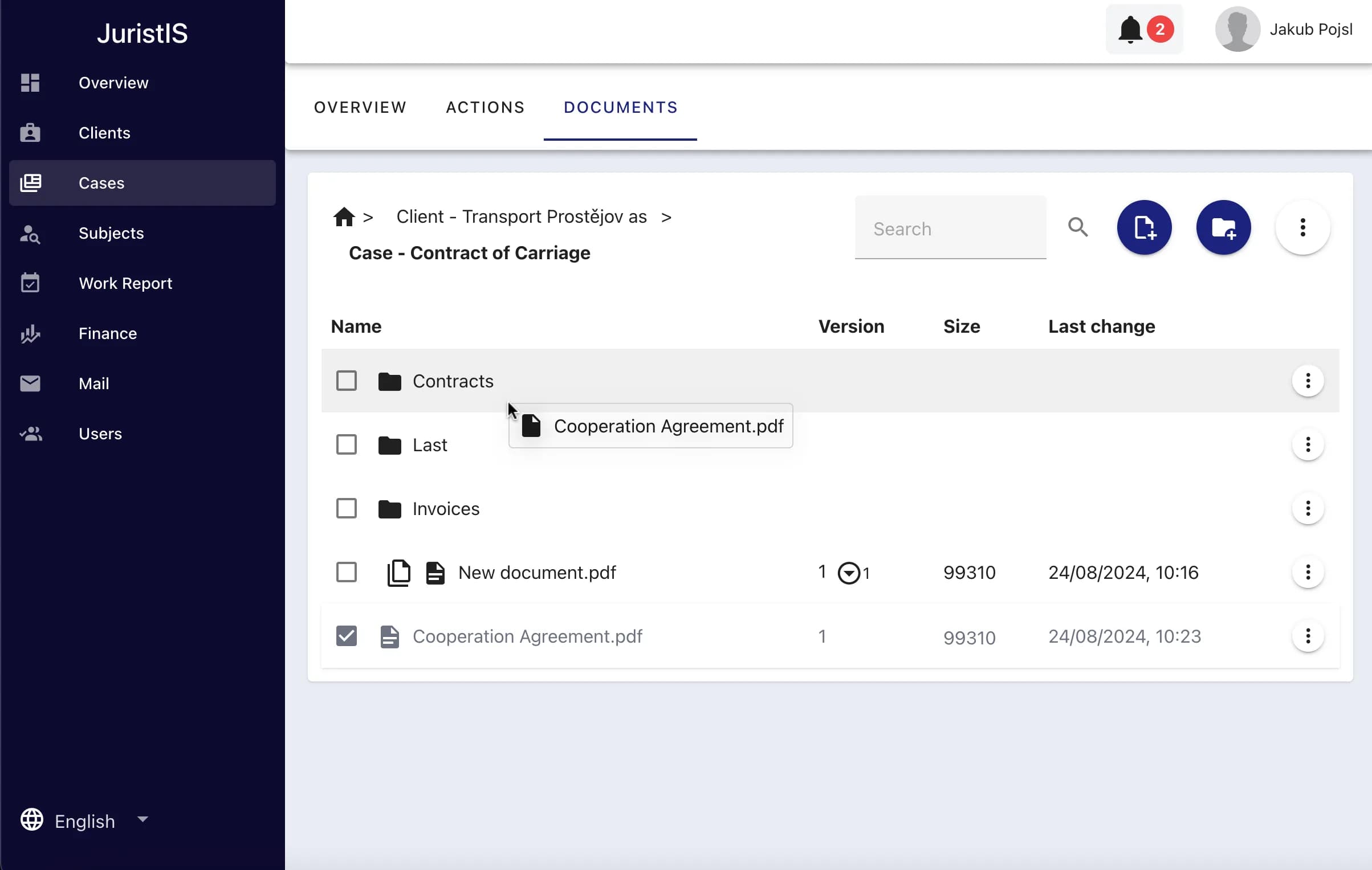
Users organise documents in folders and keep track of versions. Google Drive integration connects the system to existing document storage.
OAuth-based login and two-factor authentication protect access. Administrators configure permissions for lawyers, assistants and other staff according to their roles.
Connectedpublicregistermodules
Five modules retrieve and monitor client, court and company information from public sources.
InfoSoud
Retrieves court case information and updates users on new developments.
InfoJednání
Retrieves hearing dates, times and published schedule changes.
Insolvency Register
Monitors ongoing insolvency proceedings and alerts users to relevant changes.
Company Register
Monitors company records, notifying users of changes in structure, management, documents, or status.
Self-Employed Register
Tracks self-employed individuals, updating users on new registrations, cancellations, or changes.
Testing,deployment
Testing everyday workflows
We tested the main workflows using scenarios from legal practice and addressed issues before deployment.
Testing register and API connections
Integration tests checked data from external registers and APIs. Automated tests covered key functions, including data retrieval and authentication.
Changes based on user feedback
Feedback from beta users led to changes in the interface and document workflows.
Deployment and updates
We deployed the application in the cloud and set up automated checks and deployment for subsequent updates.
Planned improvements
Planned improvements include connections to more public registers and additional analytical tools.
Clients,casesanddailyworkinoneplace
JuristIS gives law firms a shared place to manage cases, documents, correspondence and billing. Public-register connections bring external records into the same workflow and reduce the need to enter that information manually.
Selectedprojects
From regulated FinTech and RegTech platforms to AI systems, marketplaces, and large e-commerce ecosystems.




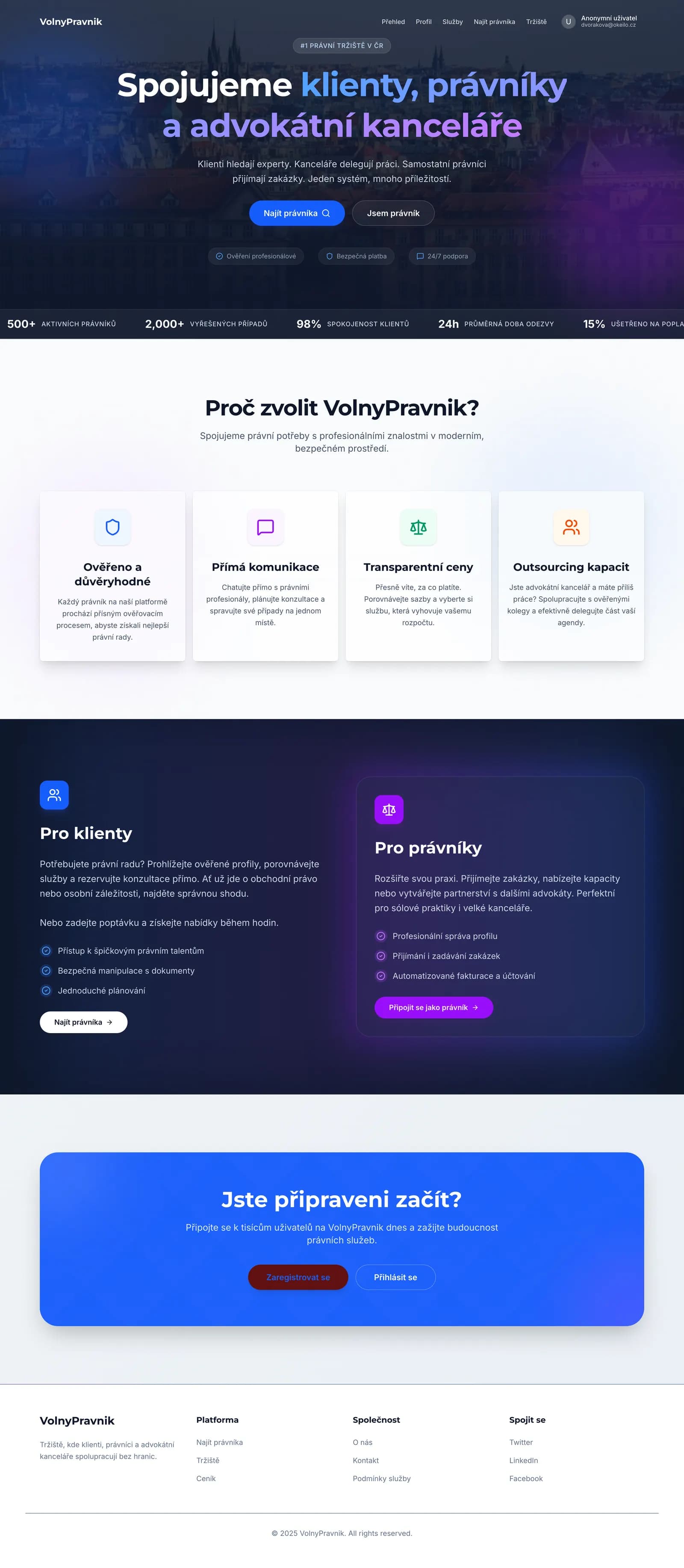
Lawyers Marketplace
Website and marketplace platform for attorneys and law firms